Shaken Credit Foundation: US Rating Outlook Downgrade Triggers Risk-Off Alarm
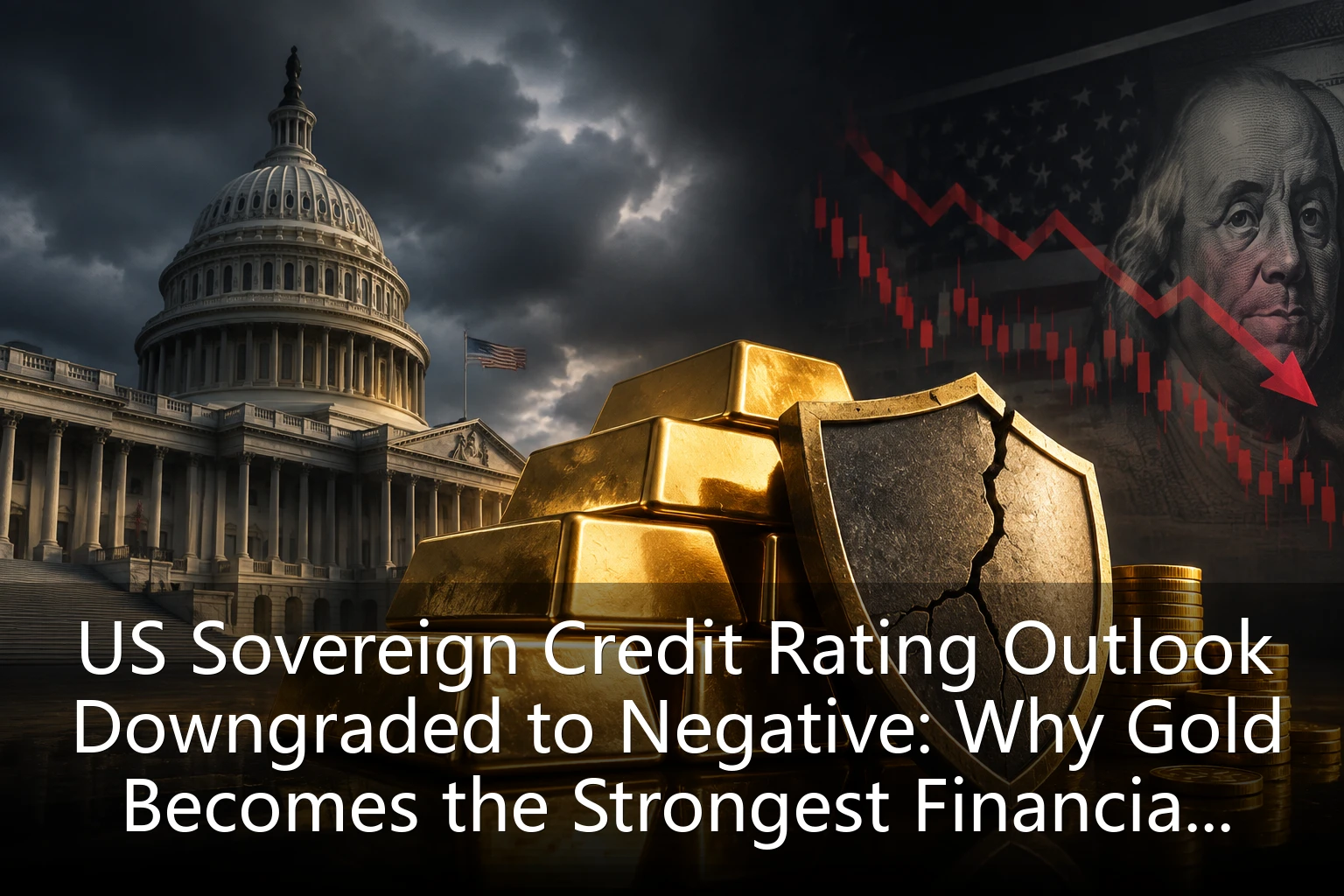
On the first trading day of August 2026, global financial markets did not greet the summer calm but were shattered by a thunderclap from a rating agency. This week, a major international rating agency downgraded the US sovereign credit rating outlook from "stable" to "negative." This decision not only directly caused the US Dollar Index to dip sharply but also prompted a massive influx of safe-haven funds into the gold market, rapidly pushing spot gold prices higher during the Asian session and approaching historical highs once again. For investors, this event is undoubtedly the most realistic answer to the question "why buy gold"—when cracks appear in the world's most important sovereign credit cornerstone, gold is the only ultimate currency that does not rely on counterparty credit.
The Fiscal Predicament Behind the Downgrade
The rating agency stated that the outlook downgrade was primarily based on concerns about the medium-term sustainability of US fiscal policy. As the US federal government debt ceiling issue approaches again in 2026, bipartisan gridlock intensifies, and mandatory spending continues to swell under the pressure of an aging population, the US debt-to-GDP ratio has climbed to its highest level since World War II. Although the Federal Reserve implemented moderate rate cuts in 2026 to support the economy, interest expenses as a share of fiscal revenue have exceeded 15%, severely squeezing fiscal policy flexibility. Market analysis suggests that the credit rating outlook downgrade means the "risk-free" label on US sovereign debt is fading, which will fundamentally shake the pricing system of global fixed-income assets.
Weakening Dollar Credit: Gold Reclaims Its "Ultimate Currency" Status
In traditional asset allocation theory, the US dollar and US Treasuries are typically viewed as "safe havens." However, when sovereign credit itself is questioned, the logic undergoes a fundamental reversal. Following the outlook downgrade, the 10-year US Treasury yield experienced abnormal fluctuations in early trading on August 2, indicating that some international buyers are demanding higher risk premiums. Although the "de-dollarization" trend has been ongoing for years, this rating event undoubtedly provides a new catalyst for it. In contrast, gold, as a hard currency with no nationality and no counterparty risk, sees its appeal rise exponentially. For global central banks and institutional investors, buying gold is no longer a simple commodity trade but a hedge against the credit fissures in the global monetary system.
As evidenced by gold ETF holdings hitting record highs recently, smart money has already positioned itself in advance. In an environment of rising sovereign debt risk, gold can not only hedge against inflation but also against credit devaluation risks triggered by political deadlock. This is the core value of gold as a "financial firewall."
The Fed's Dilemma: Tug-of-War Between Rate Cut Expectations and Sticky Inflation
The outlook downgrade places the Federal Reserve in an extremely awkward policy dilemma. On one hand, the US government needs low interest rates to ease debt rollover pressure, raising market expectations for further Fed rate cuts; on the other hand, credit rating downgrades are often accompanied by capital outflows and currency depreciation pressure, which directly push up import prices, making already sticky core inflation even harder to subside.
This classic precursor to "stagflation" is the perfect breeding ground for a gold rally. Historical data shows that when the Fed raises rates to curb inflation, gold is constrained by rising real interest rates; but when credit risk triggers runaway inflation expectations, real interest rates often fall due to nominal rates lagging behind, causing gold's dual attributes of safe haven and inflation hedge to erupt simultaneously. For ordinary investors, allocating gold at this time is not just about betting on higher gold prices but also about preventing a double blow to cash and bond assets in a potential stagflationary environment.
Rebalancing Asset Allocation: From "Buying Gold" to "Saving Gold"
As the US sovereign credit outlook turns negative, the asset allocation logic for high-net-worth individuals and family offices is undergoing a profound transformation. In the past, gold was often seen as a short-term trading tool or a defensive asset; but against the macro backdrop of 2026, gold is gradually returning to its essence as a long-term store of wealth. An increasing number of financial advisors are recommending clients increase their allocation to physical gold or gold ETFs from the traditional 5% to 10%-15%.
- Hedging Systemic Risk: When sovereign credit default risk rises, gold can insulate against the chain reactions triggered by financial system collapse.
- Fighting Inflation Erosion: Although US CPI growth has slowed, long-term upward price pressures from tariff policies and supply chain restructuring persist.
- Optimizing Portfolio: Gold's low correlation with mainstream stocks and bonds makes it the best choice for diversifying investment risk.
Second Half of 2026: Is the Window for Gold Allocation Still Open?
Although gold prices are currently fluctuating at high levels, the structural benefits brought by the outlook downgrade are far from over. Market analysts point out that if the US Congress fails to produce a credible deficit reduction plan during the autumn budget negotiations, a substantive rating downgrade for US sovereign credit is highly likely within the next three months, triggering a massive asset reallocation by global pension funds and insurance institutions. At that point, gold will not just rise slowly but could see a surge of safe-haven buying.
For investors still on the sidelines, the current price correction may be a good entry opportunity. In the process of rebuilding credit in the global monetary system, gold is not only a powerful tool against inflation but also a "ballast stone" against systemic credit risk. This warning from the rating agency once again proves to the world: in an era filled with uncertainty, gold is always worth allocating.