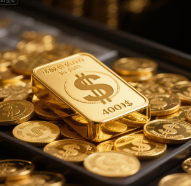
$4,000 Is Just a Stop Along the Way: Why Gold’s Bull Market Is Still Alive
Keywords: gold, bull market, store of value, dollar credibility, central bank buying, inflation hedge, asset allocation
Gold is not a return-chasing asset; it is a value anchor that spans cycles. With uncertainty in the global monetary system still rising, geopolitical conflict frequent, and fiscal expansion and debt pressure intensifying, gold’s role as the ultimate store of value may be more irreplaceable than ever. Looked at over a longer horizon, $4,000/oz is probably not the end of gold’s rise; it may simply be another stop in a long bull market.
1. Gold’s Rally Is Not Just About Safe-Haven Sentiment
In the past, gold rallies were often explained simply as safe-haven buying, but this cycle runs deeper. First, the major economies have long kept monetary policy loose. Even if inflation has eased at times, the long-term upward shift in price levels caused by money creation has not disappeared. Second, while real interest rates have moved around, they have struggled to stay at a level high enough to suppress gold for long. In other words, gold is not facing a single short-lived emotion; it is being repriced against a systemic macro backdrop.
More importantly, the logic of gold pricing is shifting from “Is there panic?” to “Is there trust?” When confidence in fiat purchasing power, debt sustainability, and fiscal discipline weakens, gold is no longer just a temporary shelter in a crisis. It becomes a normal choice for capital seeking certainty.
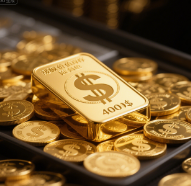
2. Dollar Credibility and the Rebalancing of the Global Reserve System
Gold has regained the attention of global capital because the dollar-based reserve system faces a more complex external environment. U.S. Treasury debt keeps climbing, fiscal deficits remain high, and interest costs are squeezing policy room. As a result, markets are reassessing the long-term stability of dollar assets. At the same time, emerging-market central banks have continued to add gold, making it one of the most important trends in reserve management in recent years.
This is not an accident. For sovereign institutions, gold does not depend on any one country’s credit backing and is not exposed to cross-border payment frictions. It is a reserve asset with no counterparty risk. In an era of deeper geopolitical fragmentation and more diversified trade settlement, its strategic value rises sharply. In other words, gold is not only a trading instrument for price swings; it is the “ultimate insurance” in global asset allocation.
3. Why $4,000 May Only Be a Stop Along the Way
From a long-term structural perspective, breaking through $4,000 does not mean gold is fully valued. On the contrary, that level may simply reflect the market’s gradual pricing of a new macro order. As long as high debt, large deficits, low growth, geopolitical risk, and slow trust repair in the monetary system remain in place, gold’s upside will not close easily.
Also, gold does not rise in a straight line. It usually advances in stair-steps: a sharp run, then consolidation, then another breakout. Each leg higher brings new money and a new round of reassessment. For long-term investors, the real question is not where one round number sits, but whether the drivers behind gold’s revaluation have changed. For now, they have not; if anything, they are strengthening.
4. Gold’s Value Is Being Reappraised
As stocks, bonds, and real estate all face volatility and uncertainty, gold’s advantages are becoming visible again: it does not depend on corporate earnings, credit expansion, or continuous cash flow. Its value comes from scarcity, historical consensus, and cycle-to-cycle stability. For institutions, gold can reduce tail risk. For individual investors, it is an important tool for hedging currency debasement and systemic risk.
Gold is therefore not a dull asset. It is a particularly valuable asset in uncertain times. The more complex the world becomes, the simpler gold’s logic looks: preserve value, hedge risk, and stand outside the credit system.
Conclusion
The long-term gold bull market is, at its core, part of the reordering of global asset pricing. $4,000 is not the destination; it is a stage in the market’s recognition of a new reality. As long as it takes time to repair monetary credibility, fiscal discipline, and geopolitical order, gold’s core role will remain intact. For investors, rather than guessing the top, it is better to understand the trend: the era of gold as the ultimate store of value may only just be beginning.