Introduction: Capital Gaming at the $3,000 Mark and the "Silence" of ETFs
On August 14, 2026, the global precious metals market is at a delicate moment. After international gold prices broke through the historic psychological mark of $3,000/oz, they did not soar as some aggressive bulls expected but entered a phase of high-level consolidation and volatility. At this critical juncture, market attention has shifted from simple price fluctuations to deeper capital flow indicators—changes in Gold ETF (Exchange Traded Fund) holdings.
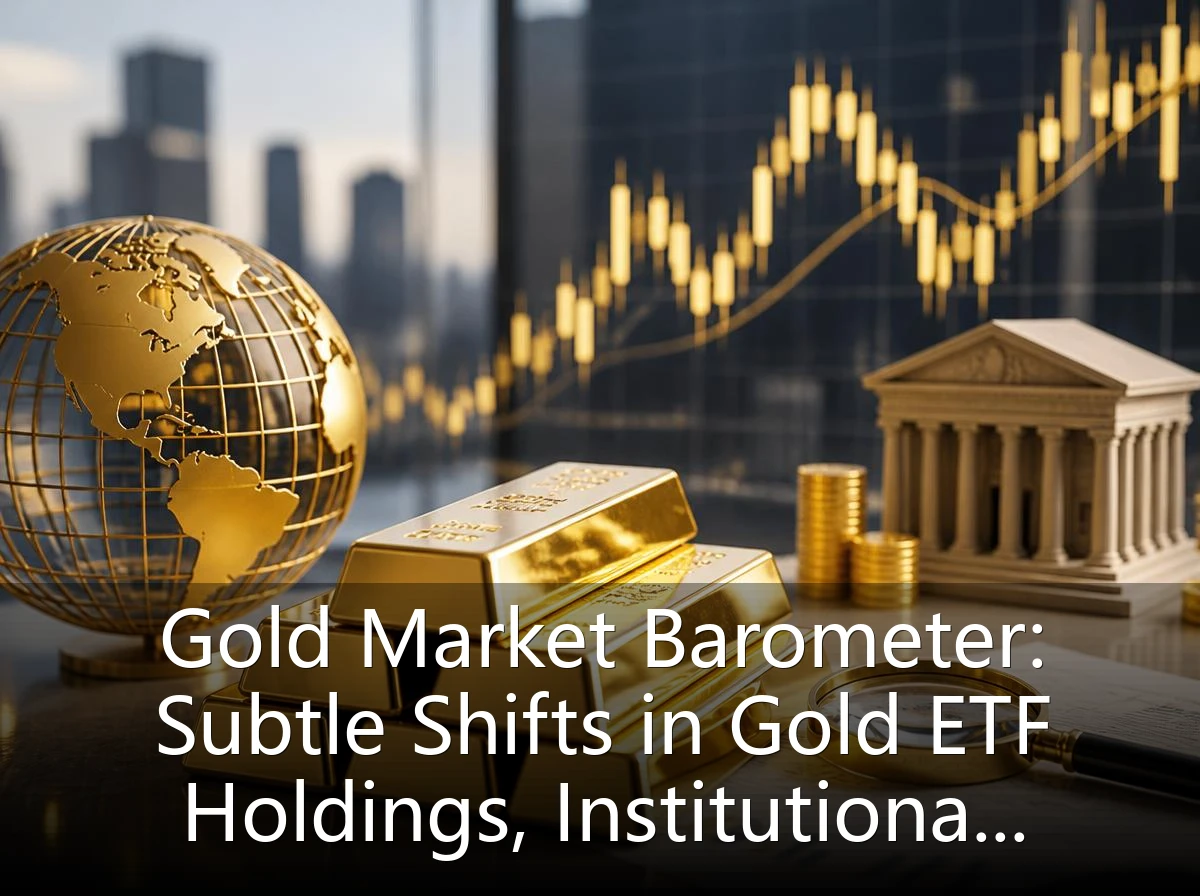
As a bridge connecting retail investors and institutional funds, gold ETF holdings have long been regarded as the market's "barometer" and "weathervane." They not only represent the strength of physical gold demand but also reflect the latest judgments of large asset management institutions regarding the macroeconomy, monetary policy, and geopolitical risks. Recent data shows that the holdings of the world's largest gold ETF, SPDR Gold Trust, have entered a rare "stalemate" during the high-level volatility of gold prices. What kind of gaming logic is hidden behind this? At the high of $3,000, what key signals will the changes in gold ETF holdings provide for the future market trend?
Current Status of Gold ETF Holdings: Divergence in Capital Flows Under High-Level Consolidation
Entering the second half of 2026, as gold prices continue to refresh historical records, the capital flows in the gold ETF market have shown obvious characteristics of divergence. Unlike the past when ETF holdings surged simultaneously during unilateral gold price rises, the growth rate of ETF holdings in this round has significantly lagged behind the increase in gold prices.
Specifically, gold ETFs in the North American market saw small net outflows in early August, with some profit-taking positions choosing to cash out and leave near the $3,000 mark. This indicates that after months of gains, some short-term trading funds are cautious about continuing to chase highs. However, this outflow has not formed a trend of "stampede." Gold ETF holdings in the European market remain relatively stable and even showed contrarian increases on certain trading days. This inter-regional divergence reflects the pricing differences of investors in different markets regarding the dollar cycle and geopolitical risks.
Notably, although the growth rate of total holdings has slowed, the concentration of holdings has quietly increased. Long-term strategic funds have not significantly reduced their positions due to short-term price fluctuations but have shown a certain degree of support during the pullback process. This "long bullish, short bearish" holding structure means that the current adjustment in gold prices is more technical than a trend reversal. The hesitation of institutional investors at the $3,000 mark is essentially waiting for a new macro catalyst to break the current balance.
The Leading Role of the North American Market
As a barometer for the global gold ETF market, capital movements in the North American market are particularly critical. Recent changes in SPDR Gold Trust holdings show that institutions are reassessing the actual impact of the Fed's policy path on gold. Although the market generally expects the Fed to cut interest rates again at the September FOMC meeting, the gaming regarding the magnitude of the rate cut remains intense. Some institutions worry that if US economic data are too strong, leading to failed rate cut expectations, the US Dollar Index will rebound, suppressing gold prices. Therefore, the hesitation of North American funds is a risk-averse reaction to "policy uncertainty."
The Rigid Demand for Safe Haven in the European Market
Compared with the North American market, gold ETF holdings in the European market appear more resilient. This is mainly due to the complex geopolitical situation in Europe and relatively weak expectations for economic growth. For European institutions, allocating gold is not only a tool to hedge against inflation but also the ultimate means to deal with potential geopolitical conflicts and fluctuations in the fiat currency system. This allocation demand based on "rigid safe-haven needs" makes European capital show stronger determination and willingness to hold when facing high-level volatility in gold prices.
Deep Logic Behind Holdings Changes: A Trio of Inflation, Interest Rates, and Safe Haven
Every fluctuation in gold ETF holdings is a projection of macroeconomic variables at the asset allocation level. In the current market environment, the core logic influencing institutional holdings decisions is mainly concentrated in the following three aspects:
- The Repeated Gaming of Inflation Expectations: Although the overall US CPI data in 2026 has retreated compared to previous years, core inflation remains stubborn. When allocating gold, institutional investors not only focus on current inflation levels but also on future inflation expectations. Recent oil price volatility and cost pressures brought by supply chain restructuring make it difficult for long-term inflation expectations to cool down quickly. As a hard currency for fighting inflation, gold's strategic allocation value is still viewed favorably in the long term. Short-term fluctuations in ETF holdings are more tactical adjustments by institutions during inflation data release windows rather than a denial of gold's anti-inflation attribute.
- Sensitivity Test of Real Interest Rates: Gold yields no interest, and its real yield is negatively correlated with nominal interest rates. The current market is in a critical period of transition from the Fed's "high interest rate restrictive" stance to "neutral interest rates." The downward expectation of nominal interest rates provides support for gold, but the stickiness of inflation limits the downward space of real interest rates. This "dilemma" interest rate environment makes institutions more inclined to flexibly adjust ETF positions to capture trading opportunities brought by real interest rate fluctuations.
- The Premium of Geopolitical Risks: The global geopolitical landscape in 2026 has not eased significantly, and tensions from Eastern Europe to the Middle East still exist. This systemic uncertainty is an important "ballast stone" for gold ETF holdings. As long as geopolitical risks do not see a substantial subsidence, it is difficult for institutions to significantly reduce defensive gold positions. The stability of recent ETF holdings is precisely a confirmation of the global geopolitical risk premium.
The Role of ETF Barometer from a Historical Perspective: From 2020 to 2026
Looking back at history, changes in gold ETF holdings often accurately capture major turning points in the market. In the early stages of the 2020 pandemic outbreak, global gold ETF holdings surged, pushing gold prices to a historical high of $2,075. In the subsequent adjustment period, the continuous outflow of ETFs also foreshadowed the pullback in gold prices in advance.
Comparing the current market environment with 2020, we can find significant similarities and differences. The similarity is that the concern about fiat currency depreciation caused by the large-scale release of liquidity by global central banks remains the core driving force for gold ETF allocation. The difference is that gold prices in 2026 already stand at the high of $3,000, and the pressure from profit-taking is far greater than in 2020. In addition, the current inflation logic stems more from structural factors on the supply side rather than simple monetary over-issuance.
From a technical analysis perspective, although current gold ETF holdings have not reached a historical high, they still remain in the historical high range. This means the market foundation remains solid, and a large amount of long-term chips are locked. As long as holdings do not show a continuous and substantial decline, it will be difficult for gold prices to experience a deep decline. Conversely, once holdings show a surge in growth again, it will most likely be the starting gun for gold prices to break through the $3,000 integer mark and start a new round of rising market.
Investor Strategy: How to Interpret and Follow ETF Data
For ordinary investors, simply paying attention to the increase or decrease in gold ETF quantities has limited significance; it is more important to understand the driving factors behind them and formulate reasonable investment strategies accordingly.
First, distinguish between "tactical reduction" and "strategic exit". If the decline in ETF holdings is accompanied by a rapid rise in gold prices and enlarged trading volume, this is usually a signal of institutional profit-taking, and the market may face a short-term pullback. Conversely, if gold prices fall but ETF holdings remain stable or increase slightly, it indicates that institutions are taking the opportunity to accumulate, which is a medium-to-long-term bullish signal.
Second, pay attention to divergence signals in regional ETFs. When North American ETFs see outflows while Asian or European ETFs see inflows, it often means the market is experiencing a transfer of pricing power. This divergence is usually a feature of the market entering the middle-to-late stages, and investors should be wary of amplified market volatility.
Finally, conduct comprehensive judgment combined with the Fed policy cycle. In the late stage of the Fed's rate hike cycle or the early stage of the rate cut cycle, inflows into gold ETFs usually have sustainability. In periods of policy ambiguity, ETF holdings often fluctuate repeatedly. Investors should closely watch Fed FOMC meeting minutes and speeches by key officials, using ETF data as an auxiliary tool to verify macro logic rather than the sole decision-making basis.
Conclusion: Finding Certainty in Volatility
On August 14, 2026, the consolidation of the gold market at the $3,000 mark is both a digestion of the previous huge gains and an accumulation of strength for the next stage of the market. The subtle changes in gold ETF holdings reveal the difficult balance of institutional investors between "high valuation" and "strong expectations."
Although there are divergences in short-term capital flows, the underlying logic supporting the long-term rise of gold—global debt monetization, geopolitical turmoil, and the restructuring of the fiat currency system—has not changed. As an important part of institutional asset allocation, the stability and resilience of gold ETF holdings precisely prove gold's irreplaceable status in today's financial system.
For investors, understanding the story behind ETF holdings changes is more important than pursuing the numbers themselves. In the current moment of swinging market sentiment, maintaining faith in the long-term trend and using the signals provided by ETF data to optimize entry timing will allow one to travel steadily and far in the waves of the gold market. With the further clarification of the Fed's policy path, gold ETF holdings are expected to break the stalemate again, leading gold prices to new heights.