Gold and Silver Spot Market Overview on September 24, 2026
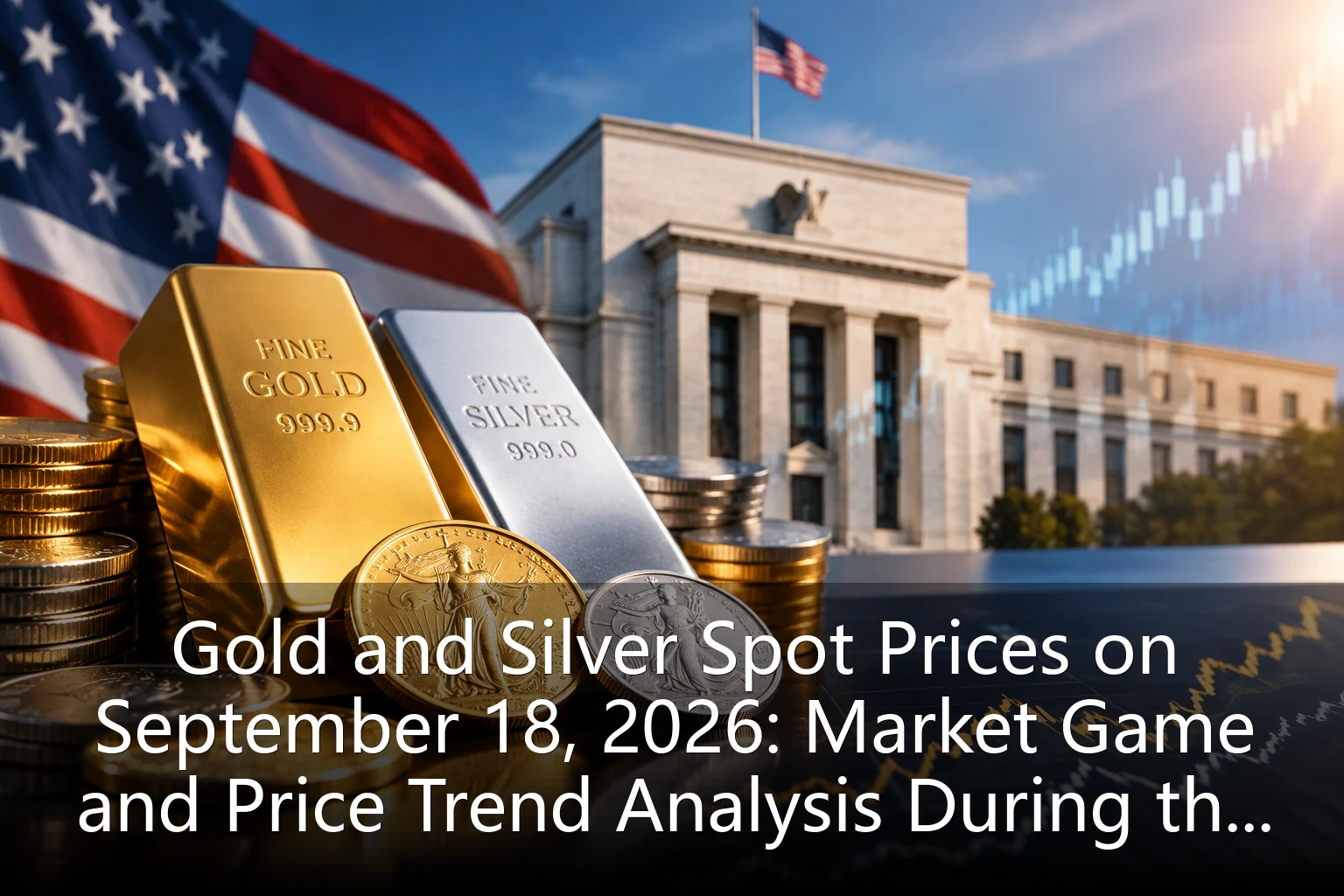
As of September 24, 2026, the US gold market has shown a fluctuating upward trend, with spot gold prices closing at $2985 per ounce, up $15 from the previous trading day, a 0.51% increase. Silver prices have also performed strongly, with spot silver closing at $31.25 per ounce, up $0.45, a 1.46% increase. The gold-to-silver ratio remained at 95.5, indicating that gold is still in a relatively strong position compared to silver.
Market Background: Federal Reserve Policy Shift Window
The current market is in a critical window for the Federal Reserve's policy shift. According to the latest economic data, US CPI rose 3.6% year-on-year in August, a slight decrease from 3.7% in July, but still above the Fed's 2% target. Meanwhile, the unemployment rate remained at a relatively low 3.8%, and the labor market remains robust. This series of data has led to divergent expectations in the market for a Fed rate cut in September, with some analysts believing the Fed may keep rates unchanged, while others believe a rate cut cycle is inevitable.
Federal Reserve Chairman Powell stated in his recent remarks that the inflation decline process has made "progress" but has not yet reached a "sustainable" level. This cautious statement has increased market volatility, with investors adopting more cautious strategies in the face of policy uncertainty.
Gold Market: Dual Drivers of Safe-Haven Demand and Institutional Holdings
The gold market has performed relatively firmly this week, supported by two main factors. First, the continued geopolitical tensions worldwide, with escalating conflicts in the Middle East and tensions between the US and Europe, have prompted investors to increase gold allocations for safe-haven purposes. Data shows that global gold ETF holdings increased by 8.3 tons in the past week, indicating that institutional investors are optimistic about gold in the long term.
Second, the US debt problem continues to escalate, with the Treasury yield curve inversion deepening, increasing market concerns about economic recession. Gold, as a traditional safe-haven asset, has attracted more capital inflows in an environment of increasing uncertainty. Net long positions in COMEX gold futures increased by 12% in the past week, indicating that speculators remain optimistic about gold's prospects.
Technically, gold prices found strong support at $2950 per ounce, with short-term moving averages forming a golden cross, suggesting that the upward trend may continue. However, the psychological barrier of $3000 per ounce remains an important resistance level, and breaking through this level requires more positive factors.
Silver Market: Game Theory Between Industrial Demand and Investment Attributes
The silver market has outperformed gold this week, with gains exceeding 1%, mainly supported by the recovery of industrial demand. The latest data shows that the US manufacturing PMI index rose from 49.2 in August to 50.1 in September, returning to the expansion zone, which provides positive support for silver's industrial demand.
Meanwhile, silver's investment attributes as a precious metal are also strengthening. Global silver ETF holdings increased by 5.2 tons in the past week, indicating increased investor interest in silver allocations. Additionally, the gold-to-silver ratio fell from 97 last week to 95.5, showing that silver's performance relative to gold has improved, and some investors are beginning to focus on silver's potential for catch-up gains.
However, the silver market also faces some challenges. Uncertainty in the global economic recovery and the timing of the Federal Reserve's policy shift could suppress silver prices. Technically, silver prices found support at $30 per ounce, with resistance at $31.5 per ounce. Breaking through this level could open up further upside potential.
Market Divergence: Different Strategies of Institutional and Retail Investors
The current precious metals market shows significant divergence. Institutional investors tend to favor long-term gold allocation, using it as a tool to hedge against inflation and geopolitical risks. According to the latest data, gold holdings of large hedge funds and pension funds increased by 15% in the past month, showing institutional optimism about gold in the long term.
In contrast, retail investors tend to prefer short-term trading and are more sensitive to price fluctuations. Gold trading volume on retail platforms increased by 20% in the past week, but the average holding period shortened to 3 days, indicating that retail investors prefer short-term operations. This divergence reflects different judgments among different investor groups about market prospects.
Additionally, market performance varies across regions. Asian markets maintain strong demand for gold, while Western markets focus more on silver's industrial demand. This regional divergence makes the global precious metals market more complex.
Price Game Theory: Interweaving of Bullish and Bearish Factors
The current price game theory in the precious metals market mainly revolves around the following factors:
- Federal Reserve Policy Shift Expectations: There are divergent expectations in the market regarding the timing of Fed rate cuts, with some investors believing a cut may occur in September, while others believe it may be delayed until December. This divergence has increased price volatility.
- US Dollar Exchange Rate Trend: The US dollar index has recently strengthened, putting pressure on precious metal prices. However, with fluctuations in US economic data, the dollar's trend is uncertain, which also provides support for precious metal prices.
- Geopolitical Risks: Escalating conflicts in the Middle East and tensions between the US and Europe have increased market safe-haven sentiment, supporting gold prices. However, the development of geopolitical risks is uncertain, making its impact on prices difficult to predict.
- Changes in Physical Demand: India and China, as the world's largest gold consumers, their demand changes have an important impact on prices. Recently, India's gold imports have increased, while Chinese market demand has remained relatively stable, and this difference also affects prices.
Investment Strategies: Finding Opportunities in a Diverging Market
Facing the current diverging precious metals market, investors can adopt the following strategies:
1. Asset Allocation Strategy
For long-term investors, it is advisable to increase the allocation of gold in the investment portfolio, using it as a tool to hedge against inflation and geopolitical risks. Gold ETFs and physical gold are relatively convenient investment methods, while gold futures and options are more suitable for experienced investors.
2. Short-Term Trading Strategy
For short-term traders, you can focus on price fluctuation opportunities for gold and silver. Technical analysis tools such as moving averages, Relative Strength Index (RSI), and MACD indicators can help identify buying and selling opportunities. At the same time, closely monitor Federal Reserve policy statements and economic data releases, as these events often trigger significant price fluctuations.
3. Arbitrage Strategy
The gold-to-silver ratio is currently at 95.5. Historical data shows that when the ratio exceeds 90, silver often has catch-up opportunities relative to gold. Investors can consider an arbitrage strategy of going long on silver while shorting gold, but need to pay attention to risk management.
4. Diversified Investment Strategy
The precious metals market is highly volatile, and investors should avoid over-concentration. Consider allocating funds across different precious metals such as gold, silver, platinum, and palladium to reduce overall risk.
Future Outlook: Policy Shift Will Reshape the Precious Metals Market Landscape
Looking ahead, the Federal Reserve's policy shift will become the key factor affecting the precious metals market trend. Once the Fed begins to cut rates, gold and silver prices are expected to usher in a new round of increases. However, the timing and magnitude of rate cuts remain uncertain, and investors need to closely follow the Fed's policy signals.
In addition, the progress of global economic recovery, the development of geopolitical risks, and the trend of the US dollar exchange rate will also impact precious metal prices. In the context of increasing global uncertainty, gold's position as a safe-haven asset may be further strengthened, while silver may benefit from the recovery of industrial demand.
Overall, the current precious metals market is in a critical window of policy shift, with significant market divergence and intensified price game theory. Investors should closely follow the Federal Reserve's policy movements, adopt investment strategies suitable for their own risk preferences, and find opportunities in uncertainty.
Conclusion
The gold and silver spot prices on September 24, 2026 reflect the complex landscape of the current precious metals market. Against the backdrop of the Federal Reserve's policy shift, gold and silver prices have shown a fluctuating upward trend, with significant market divergence and intensified investor game theory. In the face of this situation, investors should remain rational, formulate appropriate investment strategies based on their own risk preferences and investment goals, and find opportunities in uncertainty.
With changes in the global economic situation and adjustments in Federal Reserve policy, the precious metals market will usher in new development opportunities. Investors should closely monitor market dynamics and flexibly adjust investment strategies to seize investment opportunities brought by market changes.