Entering August 2026, the US precious metals market is experiencing an unprecedentedly complex situation. With the July CPI data released, the shadow of stagflation—rising inflation and slowing economic growth—looms over Wall Street again. After testing the historic $3,000 psychological mark, international gold prices are caught in a wide, high-level tug-of-war. For investors at Ruihe Precious Metals, the current environment is both a hotbed of opportunity and a risk amplifier. With unilateral trends blurring and market sentiment swinging between bulls and bears, the traditional "buy and hold" strategy captures long-term dividends but easily faces psychological pressure from sharp drawdowns during short-term volatility. Therefore, this issue of "Gold Rush Practitioners" skips macro fundamentals and provides an actionable guide for the current high-level volatile market from the micro perspectives of practical trading, options strategies, and position management.
1. Current Gold Market Microstructure and Volatility Logic
Before formulating practical strategies, we must deeply understand the inherent logic of the current high-level gold price fluctuations. The August 2026 gold market is essentially a tug-of-war between liquidity expectations and safe-haven sentiment. On one hand, Fed officials frequently signal "cautious rate cuts" to ease market concerns about inflation rebounding, keeping real interest rates high and suppressing non-yielding gold in the short term. On the other hand, the downgrade of the US sovereign credit rating outlook, the deadlock over the debt ceiling negotiations, and rising geopolitical premiums provide solid safe-haven bottom support for gold prices.
This macro contradiction directly reflects in the microstructure, showing two significant features: First, COMEX gold futures open interest surges near historic highs, with huge divergence between bulls and bears leading to spiked intraday volatility. Second, while physical gold ETF holdings remain historically high overall, short-term capital flows are diverging, and frequent in-and-out of speculative funds exacerbate jumpy price fluctuations. In this scenario, investors continuing with heavy one-way long positions are easily stopped out by institutional washouts.
2. Core of Gold Rush Practitioners: Options Strategies in High-Level Volatile Markets
Facing gold prices near the $3,000 mark, the flexible use of options tools is a required course for advanced "Gold Rush Practitioners." By building options portfolios, investors can effectively hedge tail risks without changing spot positions, and even gain extra time value returns in volatile markets.
1. Protective Puts: Buying "Insurance" for Long Positions
For investors holding large amounts of gold spot or futures longs, the biggest fear is a flash crash triggered by sudden bearish news. Buying out-of-the-money put options is the most direct risk control method. For example, if holding COMEX gold longs, put options with strike prices 3% to 5% below the current price are cost-effective choices. Although paying a premium acts like buying "accident insurance" for the portfolio, if gold prices drop irrationally, the put option's profit will significantly offset the spot position's loss, locking in the maximum drawdown.
2. Covered Calls: The "Rent Collection" Strategy in Volatile Markets
If investors believe gold is unlikely to break the $3,000 resistance soon and will likely remain range-bound, covered calls are a powerful tool to boost returns. The specific operation is: while holding gold spot or futures longs, sell out-of-the-money call options. If gold stays volatile or drops slightly, investors earn the premium, lowering holding costs; if gold unexpectedly surges to the strike price, although missing some excess upside, investors still profit at the predetermined price. In the current high-volatility environment, option premiums are rich, making this strategy highly cost-effective.
3. Vertical Spread Strategy: Precisely Striking Range-Bound Volatility
For pure short-term traders without base positions, bull call spreads or bear put spreads can be constructed. For example, buy near-the-money call options for the near month while selling the same amount of out-of-the-money calls with higher strikes expiring the same month. This strategy limits maximum loss and locks in maximum profit, making it ideal for range-bound markets where you buy low and sell high between key support and resistance levels.
3. Position Management and Mindset Control: The Ballast Through Volatile Cycles
No matter how brilliant the strategy, without strict position management, escaping losses is difficult. In the sensitive period of August 2026, with gold at historic highs, "Gold Rush Practitioners" must prioritize risk control.
- Pyramid Building and Reducing Rules: Facing the $3,000 psychological mark, avoid heavy one-time bets on a breakout. Practically, use pyramid building: buy the first batch with a larger position at key support (like previous high-volume trading zones or major moving averages); if gold rises, add smaller positions when breaking previous highs; if a pullback occurs, never average down. When reducing, do the opposite: reduce the largest position near resistance, keeping a base position until the trend clears. This lowers average holding costs and avoids being trapped in false breakouts.
- Dynamic Stop-Loss and Trailing Take-Profit Mechanisms: In highly volatile markets, fixed-point stop-losses are easily triggered by disorderly gaps. A dynamic stop-loss based on ATR (Average True Range) is recommended. For example, set the stop-loss at 1.5x ATR below the buy price; as gold rises, move the stop up to lock in floating profits. For tonight's gold forecast, if data is quiet, wide volatility is likely; traders should avoid counter-trend trading at range edges, reducing positions when touching the upper Bollinger Band and lightly going long at the lower band.
- Emotion Management and Counter-Human-Nature Cultivation: High-level volatile markets test human nature most. As gold approaches $3,000, FOMO drives retail to blindly chase highs, while intraday plunges cause irrational panic selling. Practical traders must build and strictly execute trading plans, stripping subjective emotions from the system. Remember, in volatile markets, patiently waiting for excellent risk-reward entry opportunities is far more valuable than frequent trial and error.
4. Practical Expansion from an Asset Allocation Perspective
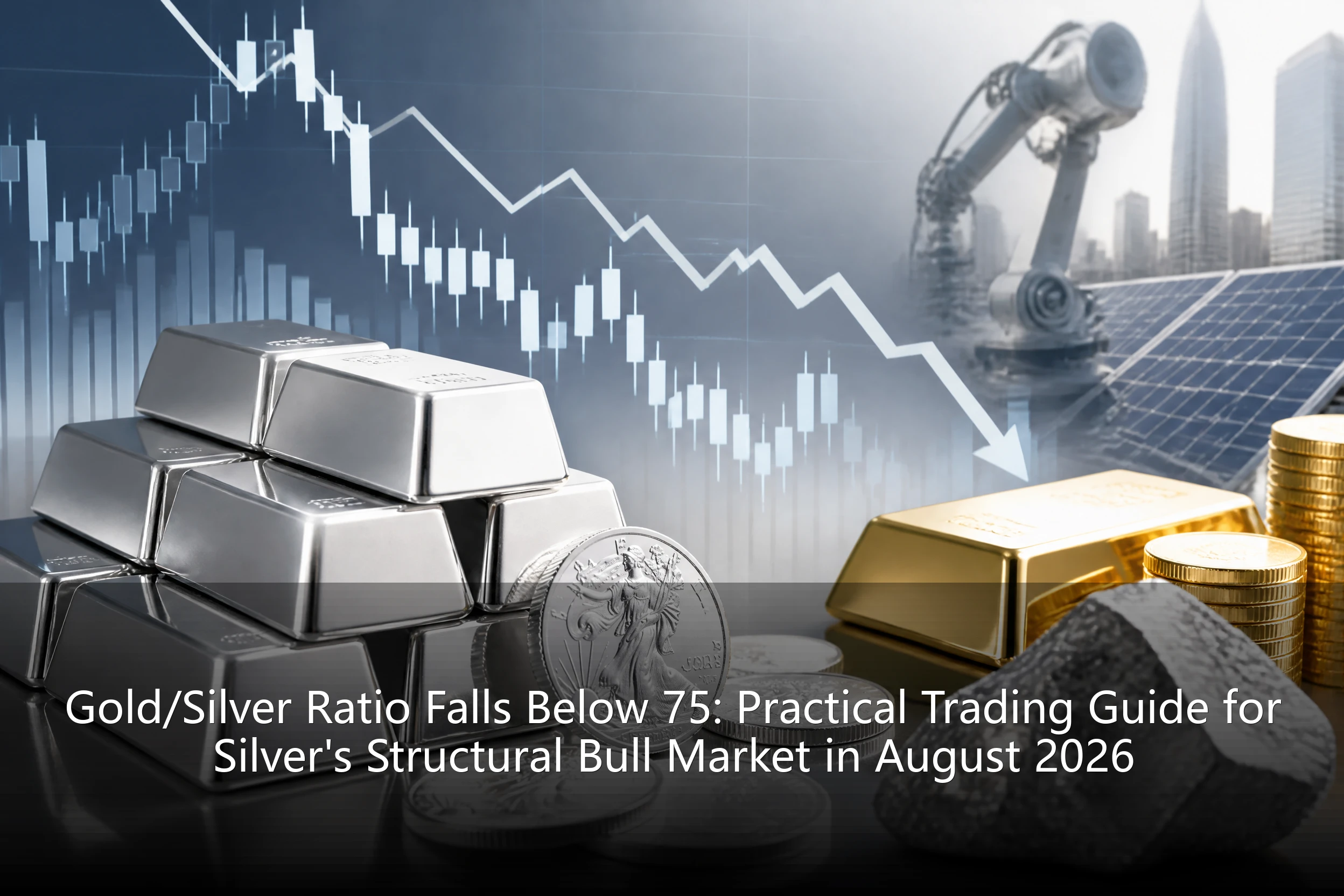
Beyond tactical options and position management, strategic asset allocation is equally important. The current gold-silver ratio has fallen below 75, highlighting silver's structural bull market attributes. In practical allocation, investors shouldn't bet everything on gold's safe-haven appeal, but should moderately allocate silver to capture elastic returns from the resonance of its industrial premium and financial attributes. Meanwhile, watch for rotational arbitrage opportunities between precious metal mining stocks and physical ETFs, building a multi-layered precious metals portfolio to smooth out single-asset volatility risks.
In summary, the August 2026 precious metals market is at a crossroads of challenges and opportunities. Gold volatility before the $3,000 mark is not only a repricing of Fed policy paths but also a dual test of investors' trading skills and mindsets. As "Gold Rush Practitioners," only by abandoning unilateral thinking, skillfully using options hedging tools, strictly executing pyramid position management, and maintaining a calm, counter-human-nature mindset, can we go far in the magnificent gold bull market, turning volatility into a source of sustained profit. In the upcoming sessions, Ruihe Precious Metals will continue tracking Fed policy trends and real-time market evolutions, providing the most hardcore practical trading guides.